

Tiffany Watt Smith Londra Yunus Emre Enstitüsü’nde Duyguların Gizli Tarihini Anlattı
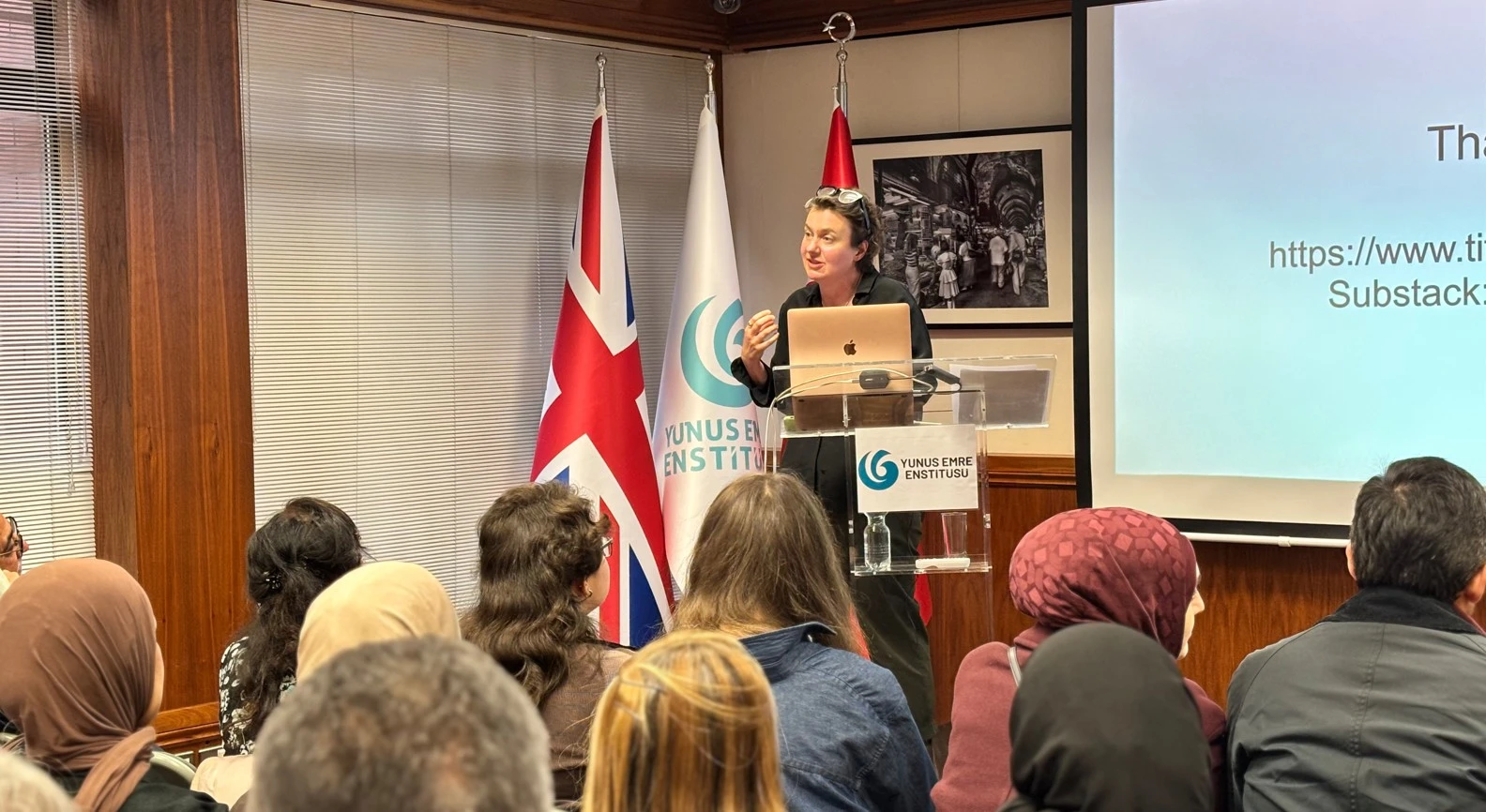


“Ya duygularımız sadece biyolojik birer donanım değil de, miras aldığımız hikâyelerden ibaretse?” Araştırmacı ve yazar Tiffany Watt Smith, Londra Yunus Emre Enstitüsü’nde gerçekleştirdiği “Duyguları Yeniden Olağanüstü Kılmak” başlıklı konuşmasında bu sorudan yola çıkarak dinleyicileri duyguların kültürel ve tarihsel dünyasında bir yolculuğa çıkardı.
Yoğun katılımla gerçekleşen etkinlikte Smith, mutluluk, neşe ve nostalji gibi duyguların yalnızca bireysel ya da biyolojik deneyimler olmadığını; toplumlar, tarihsel dönemler ve kültürel beklentiler tarafından şekillendiğini anlattı. Özellikle “mutluluğun gizli tarihi” üzerine yaptığı değerlendirmeler dinleyicilerin büyük ilgisini çekti.
Konuşma boyunca Almanca’daki Schadenfreude (başkasının talihsizliğinden duyulan sevinç) ve Japonca’daki Amae (şımartılma arzusu) gibi farklı kültürlere özgü duygu kavramları üzerinden, duyguların evrenselliği ve kültürel bağlamı tartışıldı. Etkinlik sonunda gerçekleştirilen soru-cevap bölümü ve kitap imza etkinliği de yoğun ilgi gördü.
Londra Yunus Emre Enstitüsü’nün samimi atmosferinde gerçekleşen etkinlik, Enstitü’nün farklı kültürler arasında düşünsel ve sanatsal diyalog kurma misyonunun dikkat çekici örneklerinden biri oldu. Katılımcılar geceden yalnızca bir kitapla değil, gündelik duygulara dair yeni bir bakış açısıyla ayrıldı.
Tiffany Watt Smith Explores the Hidden Histories of Human Emotion at Yunus Emre Enstitüsü – London
What if our emotions aren’t just biological hard wiring, but stories we’ve inherited? This was the central question at Yunus Emre Enstitüsü – London during an illuminating evening with researcher Tiffany Watt Smith. Her talk, titled “Making Emotions Extraordinary Again,” took a capacity crowd on a journey through the hidden histories of our feelings. Smith demonstrated that even our most private moments – a flash of joy or a wave of nostalgia – are shaped by centuries of cultural shifts and social expectations.
The atmosphere was one of quiet discovery as Smith unpicked the complex layers of how we understand ourselves. Rather than seeing emotions as fixed traits, the audience was invited to see them as extraordinary cultural constructs. The discussion sparked a lively Q&A session, with guests eager to explore how these historical frameworks influence our contemporary lives. Following the lecture, a book signing allowed the conversation to continue, marking another successful instalment of the Institute’s commitment to bringing world-class thinkers to the London community.
A significant portion of the lecture was dedicated to the hidden history of happiness. In a modern world that often views the pursuit of happiness as a mandatory individual achievement, Smith provided a refreshing counter-narrative. She traced how the definition of a good life has shifted from ancient notions of luck and divine favour (where happiness was something that happened to you) to the modern secular obsession with emotional control and self-optimization.
Yunus Emre Enstitüsü – London provided a fittingly intimate backdrop for such a nuanced discussion. Known for bridging the gap between Eastern and Western intellectual traditions, the Institute’s setting emphasized the global nature of Smith’s work.
As Smith unpicked complex terms, like the famous German Schadenfreude (joy in another’s misfortune) or the Japanese Amae (the plea for indulgent love), the room became a space of quiet discovery.
The evening concluded with a book signing of Smith’s The Book of Human Emotions, where the dialogue continued in smaller, more personal circles. This event was a quintessential example of the Yunus Emre Institute’s mission: it didn’t just present art or history in a vacuum but connected world-class research to the lived experience of the London community. By the end of the night, attendees left not just with a book, but with a new lens through which to view every heartbeat, every tear, and every smile as a piece of living history.